
Telephonic/Zoom Call Appointments (24×7) info@mentalwellnesscentre.com +91 95883 92566, +91 92890 87771

The shocking truths about anxiety often involve how it’s a form of fear, creates untrue stories about danger (often based in the primitive amygdala), and that avoiding or fighting it makes it worse; key revelations include anxiety’s physical effects (memory issues, depression, derealization), how it hijacks your mind, and that it’s treatable, despite being the world’s common mental health condition, with so many people not getting help.
People are rushing to search engines desperately in search of solutions- they type in names like anxiety or even phrases like the best psychologist in India, hoping that they can find something so uncomfortable will be put at bay.
The thing is that most people do not apply the fact that anxiety is not the bad guy in the story. It is a natural and ancient process that has been used to guarantee the survival of human beings and still does the same thing in the contemporary world.
This issue starts with a misperception of anxiety and its estimation, or the belief that the subject is wrong, thus it merits estimation or being labelled as something wrong in an individual, instead of being seen as an indication in need of deciphering.
Anxiety is an inborn occurrence in every living being. It is the in-built alarm system of the body, which is supposed to warn us that we are in danger and is a way of getting ready to respond.
Anxiety made our ancestors live way before the birth of therapy rooms and diagnostic manuals. It helped them to be vigilant close to rocks, sensitive to storms, and sensitive to dangers.
This is even exhibited by the anxious behaviour of animals when they run away. When viewed in such a light, anxiety is not dysfunctional. It is intelligent. The problem only occurs when such a survival reaction is created too often or in non-death-threatening circumstances.
The great majority of us today are not fighting predators or seeking food. But our nervous systems are responding as though we are at all times in danger. It is not that we are afraid of physical danger, but we are afraid of failing, being rejected, losing contact, and losing meaning.
Contemporary society puts tremendous strain on identity, productivity, and self-esteem. A meaningful threat has become a stimulus which prompts the same physiological reaction as a life threat. That is the reason why anxiety is so overwhelming; it has never been intended to be turned on continuously.
Anxiety is mostly diagnosed as an inward disorder- something that is present within the individual. This method does not take context into consideration. When anxiety is considered a personal weakness, then individuals start criticising themselves for feeling such.
The self-criticism enhances distress. Symptoms are increased by suppression. Emphasis is placed on removing instead of knowing. Irony would have it that the harder you attempt to get rid of anxiety, the more power it would acquire.
Anxiety surpasses individual coping mechanisms at times. They should seek professional help, as it is not a sign of weakness; it is wisdom.
Therapeutic strategies that take into account emotional patterns of relational systems enable individuals and families to learn about the dynamics of anxiety and containment of anxiety instead of transferring it. This works well, especially in relationship counselling, in which the topic of emotional responsibility comes to the foreground of the healing process.
The worst part about anxiety is the fact that it does not remain an isolated issue in an individual. Anxiety moves. It spreads. It transfers.
Take a workplace now, a stressful day. You return home exhausted in your emotions. You withdraw. Your partner feels strained, though she does not know why. Frustration also later transpires onto a child. Then, abruptly, the whole household is disturbed.
Everyone is affected by the effects of the original stress, and no one has addressed the original stress. It is an apprehension in the circulation of a relationship system.
One of the most or the least comfortable and the most anxious things is relationships. Human beings desire to be attached, but they are afraid of vulnerability. We desire intimacy and, at the same time, be unique. This contradiction is most evident in long-lasting relationships and marriage.
According to partners, they are expected to fulfil each other on emotional aspects that used to be fulfilled by whole communities before. Instances of poor communication through unspoken or unrealistic expectations cause anxiety to increase. There is an inevitable emotional spill-over.
Anxiety is not the only aspect of a relationship. It occurs in families, places of work and communities. Human beings have developed within close-knit groups, and emotional conditions were never kept quiet.
Once anxiety is not recognised or addressed, it is transferred from one person to another as an unwanted burden. This is the reason why emotional regulation is not just a personal skill, but also a relational duty.
Anxiety is uncomfortable. We instinctively want to get out of it. Most anxiety-based responses, unfortunately, do not solve the actual problem, as they include anger, avoidance, over-controlling, and emotional shutdown.
In their place, they enhance conflict in a relationship. It is here that methods like stress and anger management therapy become essential. The frameworks can assist individuals in becoming aware of their emotional triggers, breaking the habits of reacting, and acting mindfully and not impulsively.
There is always an interpretation of behaviour by human beings. There is, however, a crucial distinction between observation and assumption. The observation is inquisitive and indifferent. The conclusion is emotive and prejudiced.
Frex apprehension is a product of supposition. The act of observation, of body sensations and emotions, of relationships, establishes distance between the two, on the one hand and doing on the other. Stiff shoulders, shallow breaths, annoyance, or the desire to do everything right are some of the signals that should not be suppressed.
Being cognizant of anxiety does not immediately eliminate it- but alters the perception of anxiety. Shame is overcome when there is a recognition that anxiety is a normal reaction and not a failure by an individual.
Awareness restores choice. Individuals are able to stop and think before responding, unlike automatically. In the long run, this lowers the emotional responsiveness and normalises relationships and marriages.
Fear was not supposed to be eliminated. It was supposed to instruct, warn and ensure. Understood wrongly, it is devastating. It can be controlled when being comprehended.
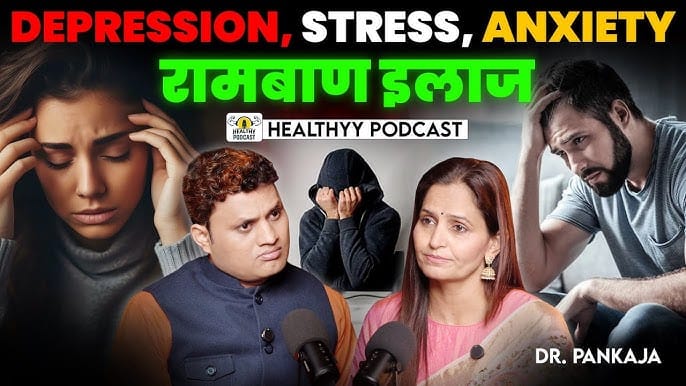
Such specialists as Dr Pankaja, who is regarded as the best psychologist in India, underline methods that would deal with anxiety on its foundations, in its relationships, emotional patterns, and in meaning-making processes.
With the help of stress and anger management therapy, relationship counselling, and work around you, an enemy can be turned into a friend, the one who takes no more control over your life but enriches it with wisdom and insight.
Dr Pankaja is an elderly mental health practitioner addressing the area of systemic therapy and emotional well-being. Her work is aimed at aiding individuals, couples, and families to comprehend the importance of anxiety in the context of relationships and regulate their emotions well, build stronger connections and demonstrate psychological resilience in the long run, considering therapeutic therapies.
• Anxiety is a question: what is it, and why do we feel anxious?
Anxiety is a natural survival mechanism that is oriented to keep us safe because of perceived danger. It only becomes problematic when it is constant, disproportionate or initiated by non-life-threatening conditions in normal living.
• Is anxiety necessarily considered a state of mental health?
No. Anxiety, per se, is not a problem. It is only diagnosed as one when it becomes a significant abnormality that affects the day-to-day functioning, relationships, or physical well-being over a long period of time.
• What is the impact of anxiety on relationships and family life?
In relationships, nervousness frequently diffuses through the emotional behaviour patterns of anger, withdrawal, or excessive control. It is known to cause tension, misunderstanding and repetitive conflicts in families or partnerships when not resolved.
• Is it possible to treat anxiety without drugs?
Yes. Others deal with anxiety easily by undergoing therapy, self-awareness, lifestyle modification, skills of regulating emotions and the knowledge of the relational patterns that induce or sustain the anxious reactions.
• Why does stress at the workplace tend to reach home?
Raw stress does not go away; it is transferred. Work-related anxiety is usually transferred to home life as irritability or emotional detachment, so other people who may be the subjects have no idea that these were the results of fear at work.
• At what point do they need to enlist the aid of a professional because of anxiety?
Professional support is advisable when the anxiety becomes overwhelming, persistent, or starts to affect work, relations, sleep, or quality of life on the individual’s coping process.